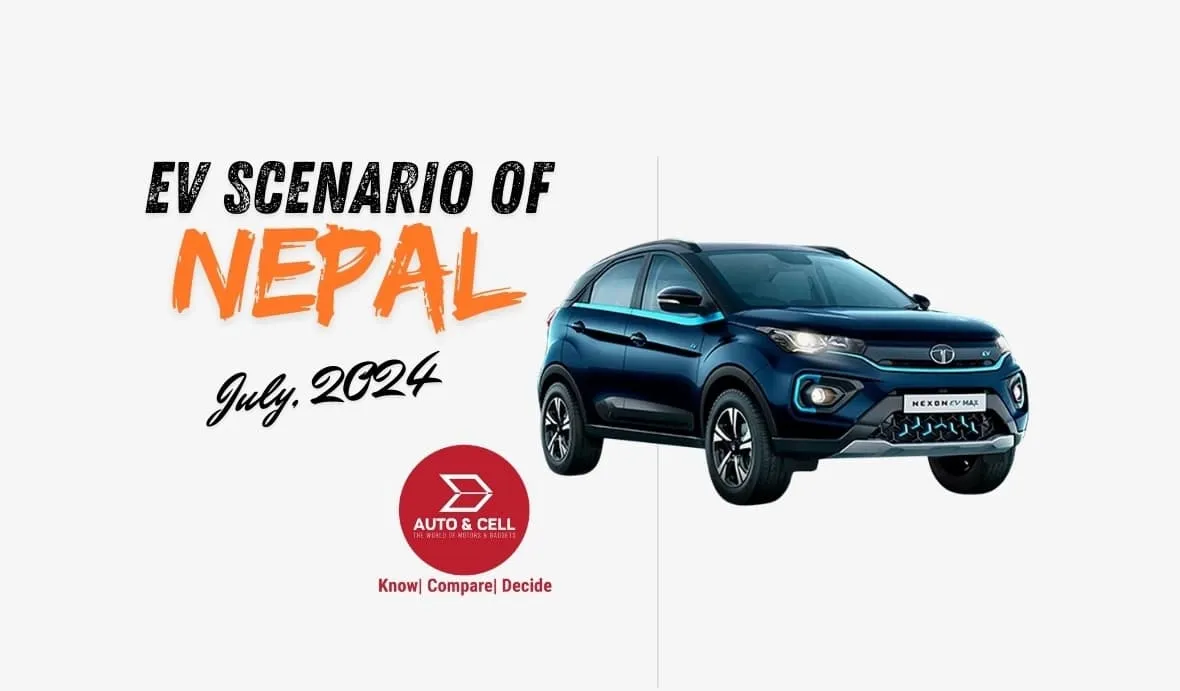
Nepal has witnessed a significant shift towards electric vehicles (EVs) in recent years, outpacing the adoption of conventional fossil fuel vehicles. The growth in EV imports, particularly from China and India, highlights a transformative period in the country's automobile sector. This article explores the trends, factors driving the surge, and the impact on the market and environment.
Key Points:
1. Rise in EV Imports:
-
2019-20 Overview:
-
Nepal imported 236 units of passenger EVs from China, worth approximately Rs674 million.
-
In the same period, imports of conventional vehicles were significantly higher at 10,310 units worth Rs9.24 billion.
-
Recent Growth:
-
In the first 11 months of the current fiscal year, Nepal imported 11,466 units of EVs worth Rs29 billion.
-
This marks a dramatic increase from the previous fiscal year, where 3,870 units worth Rs11.23 billion were imported.
2. Shift from Conventional Vehicles:
-
Decline in Fossil Fuel Vehicles:
-
Over the past four years, imports of conventional vehicles dropped from 10,310 units to 3,537 units in the first 11 months of the current fiscal year.
-
The value of these imports decreased from Rs9.24 billion to Rs4.21 billion.
3. Leading EV Suppliers:
-
China’s Dominance:
-
China accounted for 69 percent of Nepal's total EV imports in the first 11 months of the current fiscal year.
-
The imports from China totaled 7,931 units worth Rs21 billion.
-
India’s Contribution:
-
India was the second-largest supplier, with 3,277 units worth Rs6 billion.
-
Until the last fiscal year, India was Nepal’s top EV supplier.
4. Factors Driving EV Adoption:
-
Economic Incentives:
-
Easy financing options from banks, lending up to 90 percent of the vehicle's cost, have boosted EV sales.
-
The anticipation of increased duties led to a surge in sales before the new budget announcement.
-
Government Policies:
-
The government has adjusted customs and excise duties on EVs, impacting various categories differently.
-
Despite these changes, the demand for EVs is expected to continue growing.
5. Market Preferences:
-
Popular Models:
-
Chinese multinational BYD has gained significant market share with models like Atto and Dolphin.
-
The demand for mid-range EVs, priced between Rs4 million to Rs5.5 million, remains strong.
-
Consumer Trends:
-
Many buyers of conventional vehicles are also investing in EVs, indicating a broad acceptance of the new technology.
Conclusion:
Nepal’s shift towards electric vehicles is a testament to the growing awareness and acceptance of sustainable mobility solutions. The significant increase in EV imports, supported by favorable financing and government policies, marks a new era in the country’s automotive landscape. As Nepal continues to embrace EVs, the market is set to expand further, contributing to environmental sustainability and reducing dependence on fossil fuels.