A Game-Changer for EVs? Hyundai’s Solid-State Battery Breakthrough
What if your EV could charge in minutes instead of hours, offer a significantly longer range, and eliminate battery fire risks? Hyundai Motor Group is working to turn that vision into reality.
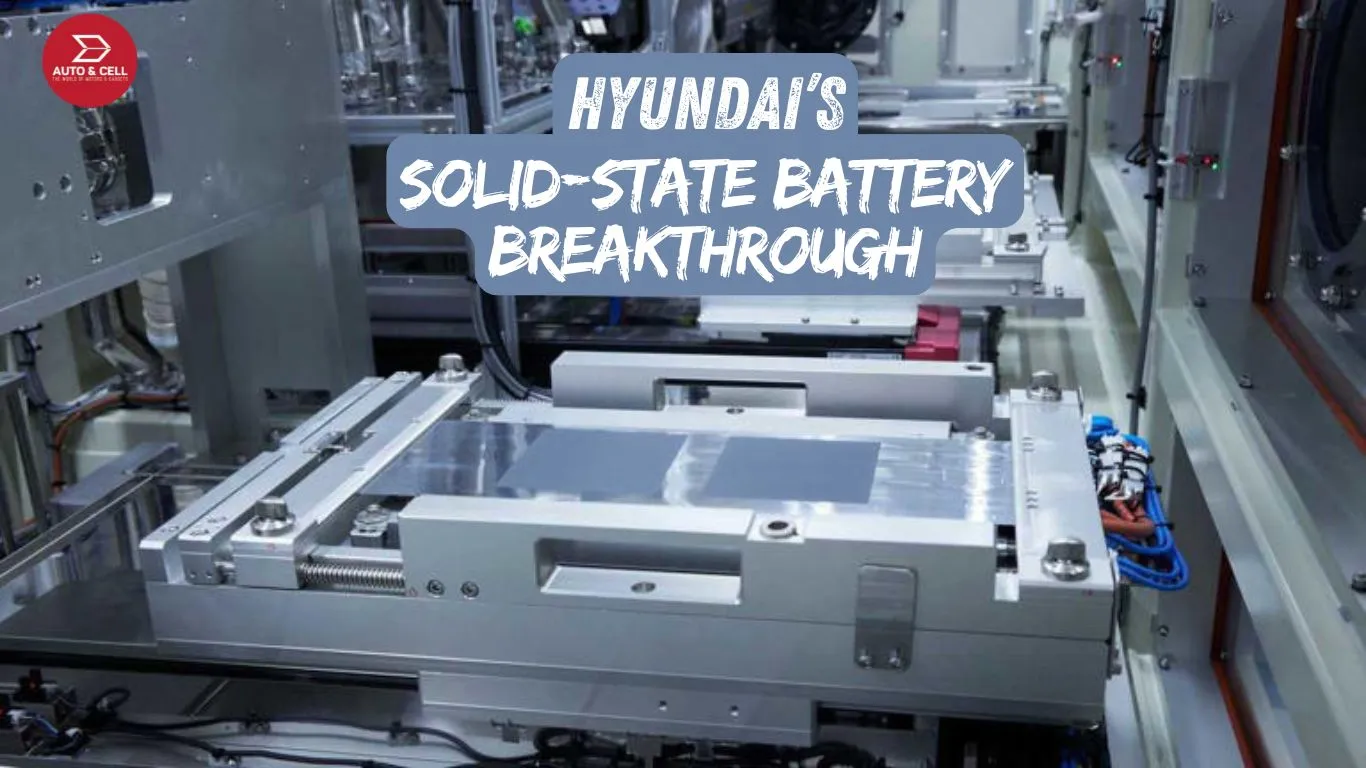
The company is gearing up to unveil its solid-state battery technology in March 2025, marking a major leap in next-generation EV power solutions. This pilot production line will serve as a testing ground before Hyundai aims for mass production by 2030. If successful, these advanced batteries could redefine the EV industry—bringing faster charging, greater efficiency, and improved safety.
But how does Hyundai's solid-state battery stack up against competitors like Toyota? And what challenges stand in the way of mass adoption? Let’s dive in.
Hyundai’s Strategic Push into Solid-State Batteries
Hyundai is investing heavily in battery innovation to solidify its position in the EV market. During its 2023 CEO Investor Day, the company announced a $9 billion investment over the next decade for battery R&D, including:
-
Lithium-Iron-Phosphate (LFP) – Lower-cost, reliable batteries
-
Nickel Cobalt Manganese (NCM) – High-performance chemistry
-
Solid-State Batteries – Future-ready technology
Also Read: Kia Unveils EV2, EV4 and PV5
Reports suggest Hyundai's solid-state battery pilot production facility at its Uiwang research center in South Korea is nearly complete. According to ET News, the official unveiling will take place in March 2025, coinciding with the opening of Hyundai’s state-of-the-art battery research hub.
High-ranking officials, industry leaders, and experts are expected to attend this event—signifying a bold move toward battery self-sufficiency and reduced reliance on external suppliers.
Why Are Solid-State Batteries a Big Deal?
Unlike conventional lithium-ion batteries, which use liquid or gel-based electrolytes, solid-state batteries use solid electrolytes (ceramics, polymers, or sulfides). This fundamental shift offers major advantages:
Higher Energy Density – More power in a smaller space, enabling longer driving ranges
Faster Charging – Dramatically reduces charge time, making EVs more convenient
Enhanced Safety – Eliminates fire risks caused by battery overheating or leaks
Longer Battery Lifespan – More charge cycles before degradation occurs
These benefits could finally overcome consumer concerns about EV range, charging speed, and safety, making electric cars a more viable alternative to gasoline-powered vehicles.
Latest News: BYD’s Free Smart Driving Technology “God’s Eye”
What’s Holding Solid-State Batteries Back?
Despite their promise, solid-state batteries remain years away from mass production due to several challenges:
|
Challenge |
Current Status |
|
High Production Cost |
Expensive materials & complex manufacturing process |
|
Scalability Issues |
Difficult to mass-produce solid electrolytes |
|
Durability Concerns |
Some materials degrade after repeated charging cycles |
|
Market Availability |
Expected around 2030 for Hyundai & Toyota |
While Hyundai is making strides in solid-state development, other automakers like Toyota, Honda, and several U.S. battery startups are also racing to commercialize the technology. Overcoming cost and production hurdles will be the key to making solid-state batteries mainstream.
Hyundai’s Roadmap for Solid-State Battery Integration
Following the launch of its pilot production line in 2025, Hyundai plans to:
-
Test prototype EVs with solid-state batteries over the next year
-
Refine production techniques before scaling up manufacturing
-
Introduce the first Hyundai EVs with solid-state batteries by the early 2030s
This initiative aligns with the broader industry push toward high-efficiency, next-gen EV batteries, ensuring Hyundai remains competitive in the global EV race.
Also Read: Volvo to Introduce Five New Models in 2025
What It Means for Consumers
For EV buyers, Hyundai’s solid-state battery breakthrough could mean:
-
More Affordable EVs in the Long Run – As costs drop, EVs with longer range and faster charging could become standard
-
Better Resale Value – EVs with durable solid-state batteries could hold value longer
-
Safer & More Reliable EVs – No risk of battery fires, even in extreme conditions
However, mass adoption won’t happen overnight. Hyundai and its competitors still need time to fine-tune the technology before it reaches consumers.
Will Hyundai Lead the Solid-State Revolution?
The transition from traditional lithium-ion to solid-state batteries could be the biggest leap in EV technology this decade. While LFP and NCM batteries continue to dominate the market, solid-state tech has the potential to erase range anxiety, cut charging times, and make EVs more practical than ever.
Would you wait for a solid-state EV, or buy a lithium-ion model today? Let us know your thoughts!
For more automobile and tech news, make sure to visit Autoncell.
-original.webp)