In a groundbreaking collaboration that could reshape the automotive industry's approach to sustainable performance, Toyota and Yamaha have joined forces to develop an innovative 5.0-liter V8 engine that runs purely on hydrogen. This strategic partnership marks a significant departure from conventional hydrogen fuel cell technology, instead focusing on direct hydrogen combustion to maintain the visceral appeal of internal combustion engines while eliminating carbon emissions.
Technical Innovation Meets Environmental Responsibility
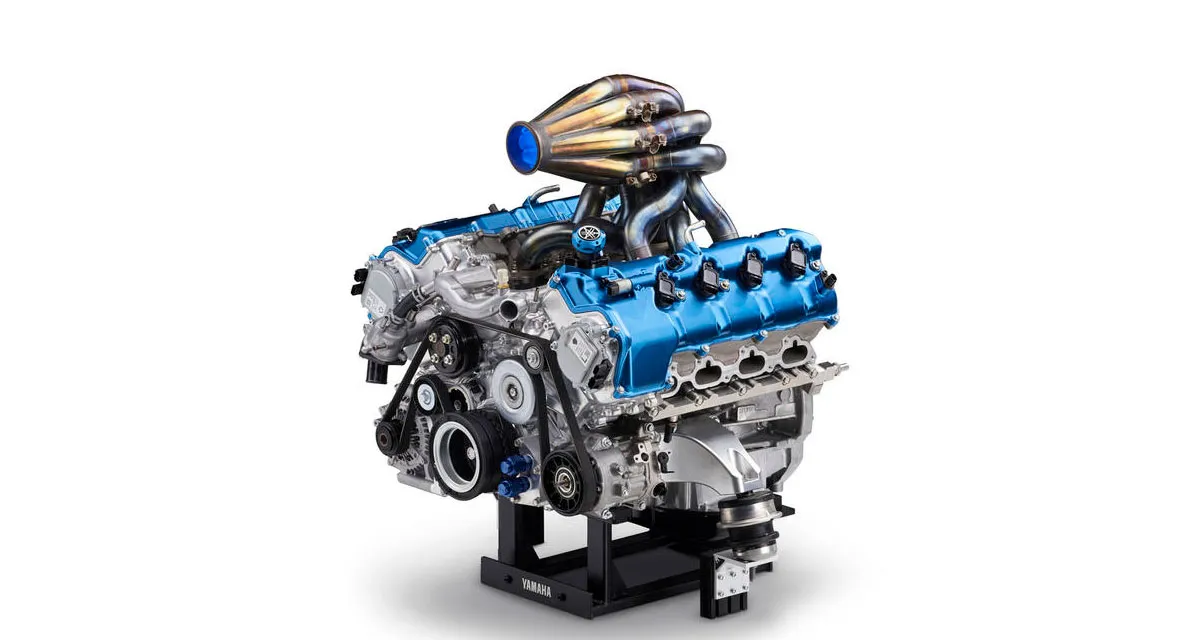
The pioneering powerplant, based on the existing V8 engine found in the Lexus IS 500 F Sport Performance and RC F, has undergone substantial modifications to accommodate hydrogen combustion. Yamaha's engineering team has implemented comprehensive changes to crucial components, including custom-designed cylinder heads, intake manifolds, and specialized injectors. The result is an impressive output of 455 horsepower and 398 lb-ft of torque (540 Nm) at 3,600 rpm, demonstrating that environmental consciousness need not compromise performance.
Drawing from their previous successful collaboration on the acclaimed Lexus LFA's 4.8-liter V10 engine, Yamaha's expertise in acoustic engineering has been applied to this hydrogen-powered V8. The engine features an innovative 8-into-1 exhaust manifold design that produces a distinctive high-frequency sound signature, maintaining the emotional connection that enthusiasts have with traditional combustion engines.
This development is part of a larger initiative, with Toyota, Yamaha, Subaru, Mazda, and Kawasaki forming an unprecedented alliance to research alternative fuel options for internal combustion engines. The partnership aims to achieve carbon neutrality while preserving the heritage and excitement of traditional engine technology.
Environmental Impact and Future Implications
The most remarkable aspect of this hydrogen-powered V8 is its environmental footprint - the engine produces only water vapor as its byproduct, achieving true zero-emission operation through combustion rather than fuel cell technology. This advancement aligns with Yamaha Motor's commitment to achieving carbon neutrality by 2050, as emphasized by company President Yoshihiro Hidaka.
"Hydrogen engines house the potential to be carbon-neutral while keeping our passion for the internal combustion engine alive at the same time," Hidaka stated, highlighting the importance of cross-industry collaboration in driving innovation. "Teaming up with companies with different corporate cultures and areas of expertise as well as growing the number of partners we have is how we want to lead the way into the future."
This development follows Toyota's previous experiments with hydrogen combustion technology, including a modified Corolla Sport that participated in motorsport events, suggesting a broader strategy to explore hydrogen as an alternative to traditional gasoline power across various vehicle applications.