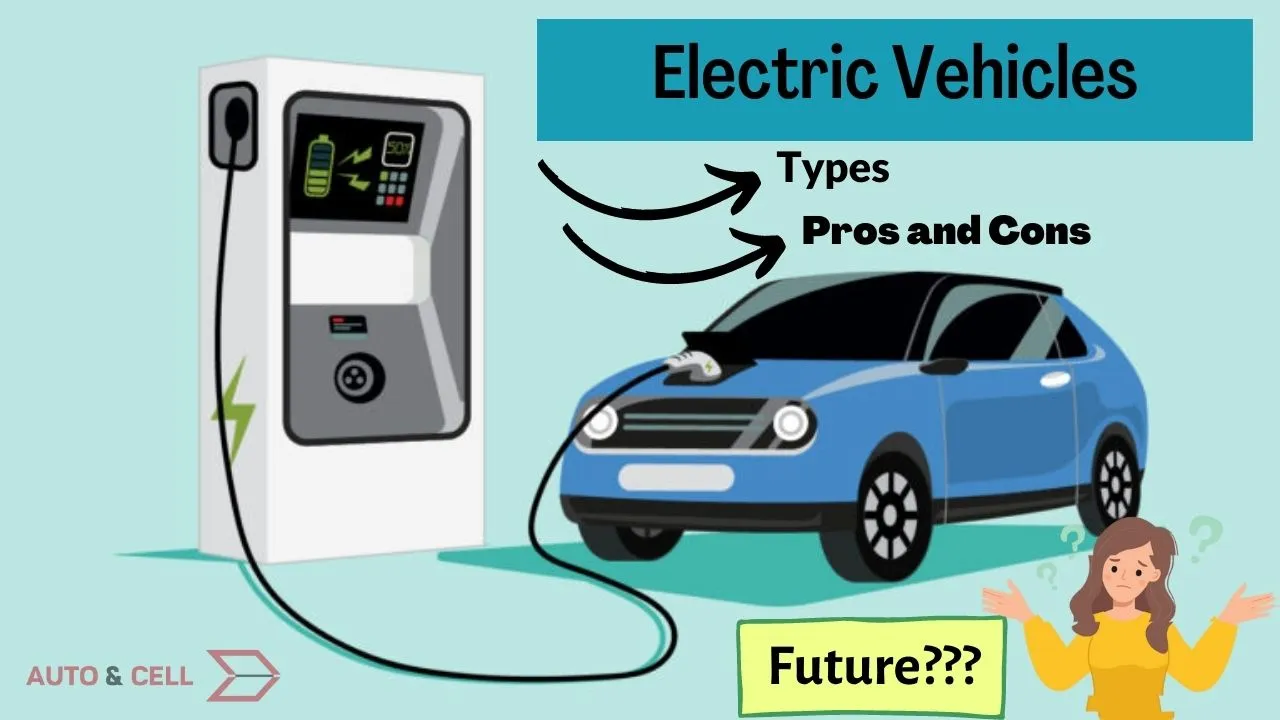
EV is a shortened acronym for the word ‘Electric Vehicle’. And to answer what an electric vehicle means, the answer lies in the name itself. Electric vehicles are vehicles that run partially or wholly on electric power instead of gas.
As the environment around us is now full of pollutants and harmful gasses deteriorating human health, electric vehicles have become a must.
Moreover, electric vehicles use very little to no amount of fossil fuels which makes them an excellent form of transportation.
Coming on to EVs, they are mostly categorized into two types. One is the Fully Electric and the other a Plug-in-hybrid. So, what does it actually mean? We have covered that for you.
Battery Electric Vehicles (BEV)
As the name suggests, battery electric vehicles, commonly referred to as BEVs are vehicles that operate fully on battery power. Unlike the gasoline brothers, battery vehicles have very few moving parts and don’t require any sort of regular maintenance.
Similarly, instead of fossil fuel sources, it uses rechargeable batteries making it more cost-efficient as well. BEVs mostly operate on Lithium-ion or Lead-Acid batteries but Li-ion is common due to its high efficiency and availability as well.
Coming on to the charging part, a question might arise amongst us. What time does a battery in an electric vehicle require to fully charge? And the answer to that is 30 minutes to up to 12 hours. This totally depends on the battery size, charger used (i.e. AC or DC Charger), and charging station as well.
In the same way, Range is also a most-talked-about factor when it comes to electric vehicles.
How much range do BEVs typically provide?
The answer to this totally depends on the battery used in the electric vehicle itself. Typically, batteries used in electric scooters provide a range of up to 120km-150km. Similarly, electric cars provides an average range of up to 400km when fully charged.
On the upper hand scenario, some non-commercial EVs produced by top EV makers have also made records of providing more than 1000+ km range. However, these EVs resides on a less commercial or prototype position.
Plug-in Hybrid Electric Vehicles (PHEV)
The next type of EV is the plug-in Hybrid vehicle. Commonly referred to as PHEVs, these types of vehicles offer a performance-based on both battery and gasoline (petrol/diesel). To be more precise, Plug-in electric vehicles or hybrid vehicles use both battery power as well as gas power. Therefore, with these vehicles, we can travel long routes without any hassle as they can operate on both the power sources.
However, unlike the BEVs, PHEVs use a smaller battery pack, therefore offering a small range as well. And due to the usage of gasoline as in the combustion engines, Hybrid vehicles use various mechanical parts as well causing maintenance issues, engine noise, expensive price tag, and more. This is the part where Hybrid vehicles lack behind compared to BEVs.
In PHEVs, the vehicle first uses the electric motor powered by the battery to run the car while after the battery runs dead, the car automatically switches over to ICE (Internal Combustion Engine).
On the other hand, when it comes to performance, PHEVs win the toss as it uses a gasoline-powered engine combined with an electric motor which in turn churns out a good horsepower. And similarly as mentioned above, the use of gasoline, as well as battery, helps the vehicle to provide a great mileage and not strike your head upon not finding a charging station.
Plug-in Hybrids VS Electric cars
As discussed above, the substantial benefit of a plug-in hybrid is the range that holds a combined range of both electric and combustion motors.
On the other hand, electric cars’ range depends only upon the battery used in the vehicles.
If you are someone who travels a lot at a long distance, PHEVs are a go-to vehicle as it offers options for both gasoline fill-up and battery charging option as well. On long journeys, it is usually a hefty job to find a charging station. However, finding a gas station isn’t something you should scratch your head for.
In the case of electric cars, a nearby charging station is a must as EV charging stations aren’t casually available mostly on long road trips.
On the contrary, PHEVs are a perfect vehicle for one for whom maintenance and price tag aren’t much of an issue compared to the performance. However, battery-powered electric vehicles are the best companion who doesn’t want to take the hassle for time to time maintenance and usually uses their vehicle for urban and day-to-day use. Comparatively, Electric vehicles are also more budget-friendly compared to their hybrid siblings.
Well, that was on the talk on Hybrid and Fully electric vehicles. Let’s now discuss some possible points listing the advantages and disadvantages of owning an electric vehicle.
Pros of Electric Vehicles
1. Energy Efficient and Environment Friendly
With no doubt, electric vehicles are very energy efficient compared to combustion machines. As EVs use a rechargeable battery and electric motor, it doesn’t emit any harmful pollution as gasoline ones.
An electric vehicle typically consumes only 25-40kWh of electricity for 100 miles of the drive. This implies that the car requires only around 1 kWh of electricity for 3 miles of coverage. If we compare that to the expense used in gasoline vehicles, the price is around 4 times higher.
This makes EVs more cost and energy-efficient as well.
Also Read: Dodge plans for all-electric muscle car by 2024
2. Low Maintenance Cost and High Performance
As all-electric vehicles don’t use any sort of mechanical parts in the driving, it is very quiet and smooth as well as require less maintenance than internal combustion engines.
Moreover, riders also claim that electric vehicle motors are very responsive and adopt good torque making it a fun driving experience. As EVs function more digitally, the recharging system of the vehicle is also very hassle-free.
3. Better resale value
Yes, that is true. Electric vehicles have good resale value to the ICE siblings. As the world government policies are slowly turning their attention to EVs, the hype for EVs is definitely moving towards a positive chart in the upcoming decades.
This fact, in turn, confirms that the demand for electric cars in the future is going to be very high. Government policies in various countries have also announced to ban the sales of petrol and diesel vehicles after 2030.
Also Read: Why is Tesla so popular in the EV market?
Cons of Electric Vehicles
1. Can travel less distance
The major con behind driving an electric vehicle is its inability to provide a long-range. As EVs mostly arrive with an average range of up to 400 km, it is a very hefty job to take EVs on a long journey.
In addition, the availability of gas stations on a long journey is very high compared to charging stations. This in turn, makes EVs less efficient to take for long journeys.
2. Longer Refuel Time
Unlike gasoline vehicles, Electric Vehicles do take a longer time to recharge. As there are batteries used in the vehicle, it requires a subsequent amount of time to juice it up. On average, an EV requires at least 30-40 mins to fully charge even using a DC Fast charging.
Using an AC home charger, the vehicle takes up to 12 hours to fully recharge making it less feasible for busy riders.
Also Read: 5 Best-Selling Electric Cars in Nepal
3. More Expensive and Battery Replacement
The major setback for an EV is the pricing itself. Electric vehicles are priced very high compared to the regular gasoline machines. More on, the battery packs in the EV need to be replaced more than once over the vehicle’s lifetime.
Overall, the purchase of an electric car or a gasoline vehicle totally depends upon the rider’s personal needs and the future usage. With a bag of pros coming in also sticks some disadvantages of owning an electric vehicle. The decision is all up to the customer.
Future of Electric Vehicles (EVs)
The major reason behind us switching towards electric vehicles leaving beside the gasoline tanks is non-other than the ongoing Global Warming. And the immense of combustion engine usage is one of the key factors pushing it.
If we love to see our future greener, and cleaner with less air and noise pollution as well, there is no other way than to switch towards electric vehicles. As electric vehicles have a zero-emission ratio of harmful pollutants, it acts a key role in the upliftment of the environment.
Also Read: 5 reasons why you should probably switch onto Electric Vehicles
World Governments’ concern towards EVs...
If we glance into the current automobile scenario, top countries around the world such as China, the USA, India, and more have already made their plans on switching to the full-electric Auto sector.
Top automobile giants around the world such as Ford, GMC, Tata, and Volkswagen have also set forward their plans to go full-electric in the next decades.
Most of the European countries and Asian countries like China, Japan, and more are also switching rapidly towards Electric vehicles. In China, 60% of the vehicles running on the roads are full-electric while the China government has planned to make it 100% by the year 2030.
Also Read: Hyundai plans to launch 6 new Fast Charging Electric Cars
Moreover, automobile companies have slowly increased their momentum in the production of electric vehicles. In addition, they have also worked on switching their ongoing gasoline counterparts to the electric version.
For instance, Indian auto giant- Tata has recently launched the electric version of its popular hatchback and SUV, i.e. Tigor and Nexon in an electrified version. These EVs have also become very popular among South-Asian auto enthusiasts.
Additionally, GMC’s popular off-road beast, Hummer is also arriving in a fully electric version by next year. Interestingly, the automakers also haven’t compromised on the performance of the vehicle as well.
Worldwide EV consumers graph is showing a positive turn in the recent years.
In US only, electric vehicle sales have grown by more than 40% a year since 2016 which is a mesmerizing figure. World’s top EV maker- Tesla’s market share is riding in tides as the craze for Tesla cars is at a next high.
Top automakers have already signed their joint venture to paint the future green by the year 2035.
If things go hand in hand, the cost of electric vehicles in the future is definitely going to reduce as well.
In summary, we can acclaim that the Future for EVs is very bright and exciting as well. If the craze for electric vehicles increases with the same momentum across the world, there is no doubt, we can confirm that ICE vehicles will next be banned in the next few decades.
And with the top automakers and country government taking a stiff decision to work on making the globe green, we hope that switching onto an electric vehicle will not be an option but mandatory in the future.
Also Read: Future of Electric Vehicles in Nepal>>>



-original.webp)